
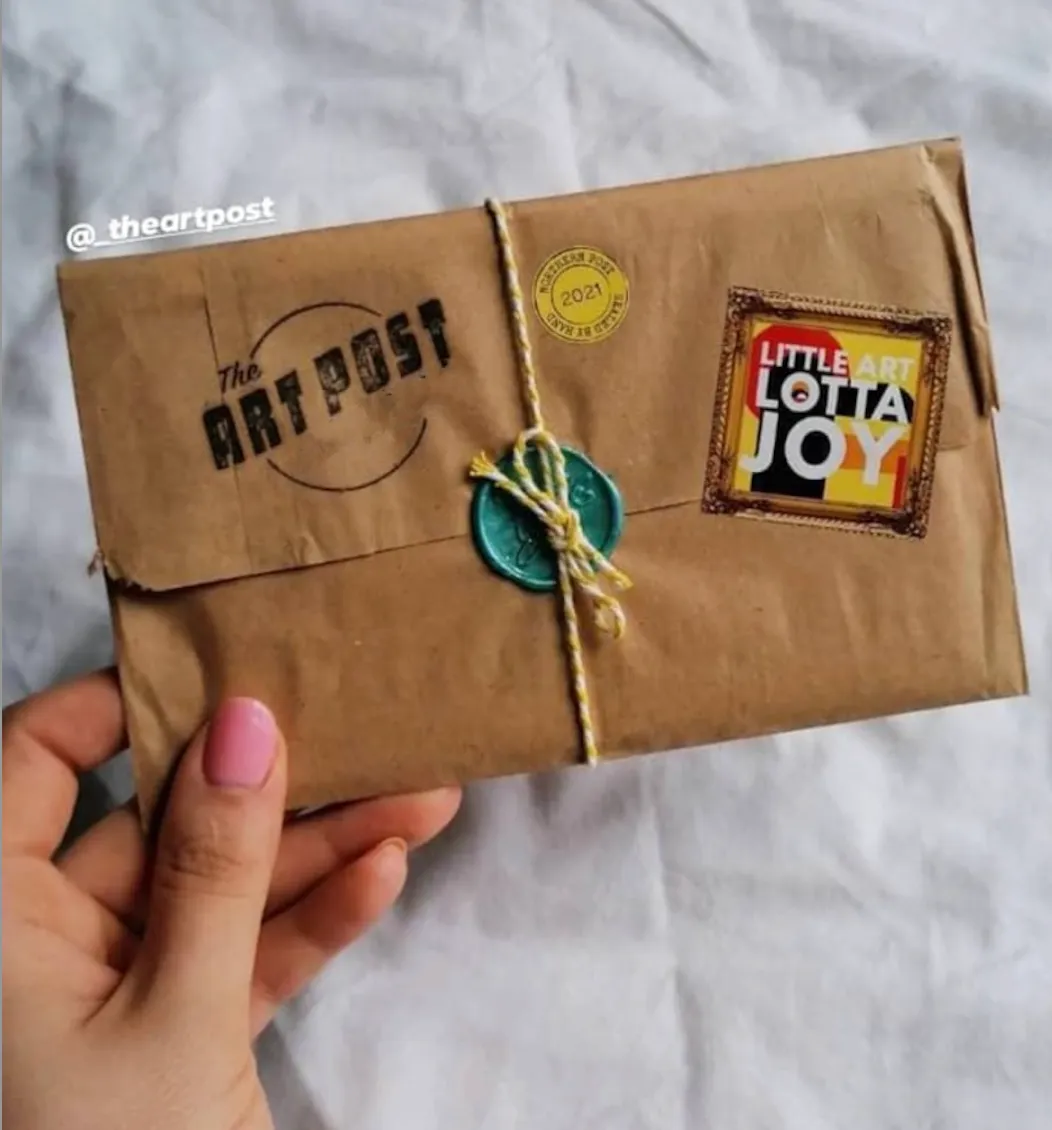
Start with something that feels like you
The best starting point is often something already happening in your practice: sketches from your walks, photographs of ordinary moments, or a painting and the story behind it.
Your club needs a recognisable idea, but it does not need an elaborate package. A considered print and a good letter can give someone a reason to keep opening your envelopes.
“Each edition, I’ll send you ______, inspired by ______.”
For example: an illustrated postcard and a short letter about something you noticed on your walks. A clear promise gives your club a useful boundary.
Snail mail club ideas to get you started
The strongest clubs repeat one simple format that suits the creator. Swipe through a few ideas, then make them your own.
01
An illustrated postcard and a short studio letter
02
A seasonal print series: four prints a year, one per season
03
A zine of sketches, notes and work in progress
04
One street, photographed through the year
05
A new poem, printed on card
06
A recipe card with an original illustration
07
Nature studies from your walks
08
A letter-writing club with a prompt and a reply card
09
A sticker club: a small sheet of original stickers through the post each month.
More on sticker clubs10
A mail club for kids: a drawing prompt, a postcard and something to colour in.
More on snail mail clubs for kids12
A postcard club: one original postcard a month, ready to frame or send on.
1. Decide what goes inside
Choose one main item and build the mailing around it. A postcard club might share a new illustration each month. An art print club might pair a reproduction with a letter from the studio. A zine can bring sketches, photographs and writing together.
Be precise about what is included. A reproduction, a signed print and an original artwork are different offers. State the size and paper, and say whether it arrives in an envelope. If a frame appears in your photographs but is not included, make that clear.
Avoid adding extras simply to make the envelope look fuller. Every item adds production time, cost and another thing to organise.
2. Choose a rhythm you can keep
Monthly mail creates a frequent connection; quarterly editions leave more time to develop the work. Choose a rhythm that fits your practice and the rest of your life.
Plan the first three editions before opening subscriptions. They do not all need to be finished, but you should know what each could contain and how you will produce it.
Explain the joining deadline, first payment, recurring payment dates and expected dispatch date. Tell people which edition they will receive if they join after the cut-off. “Monthly” alone does not explain when their first envelope will arrive.
3. Price the whole mailing
Include printing, packaging, postage, payment and platform fees, and your preparation and packing time. Allow for replacements and unexpected costs too.
Weigh and measure a finished sample before setting delivery charges. Use current quotes for your actual package and destinations. If you offer overseas delivery, cost it separately.
In the UK, Royal Mail prices by size as well as weight. A standard letter can be up to 24 × 16.5 cm, 5 mm thick and 100 g. Anything bigger, up to 35.3 × 25 cm, 2.5 cm thick and 750 g, is a large letter. A5 prints in a card-backed envelope, especially with a wax seal, usually post as a large letter, so check the thickness as well as the weight before you set your price.
For illustration only: if a £10 mailing costs £7 to produce and send, £3 remains before any artwork creation time, overheads and tax not included in that £7. Fifty members would generate £500 in revenue and £150 after those example costs. That is not £150 of take-home profit.
Cost a small first intake as well as a larger run. A club should be manageable at the number of members you actually have.
Art Post Clubs is free to start, with a 6% platform fee on each payment, so you can build the cost into your price from day one. Start your club
4. Make the first edition before selling it
Produce a complete sample, including the packaging, and post it to yourself or someone who can give you honest feedback.
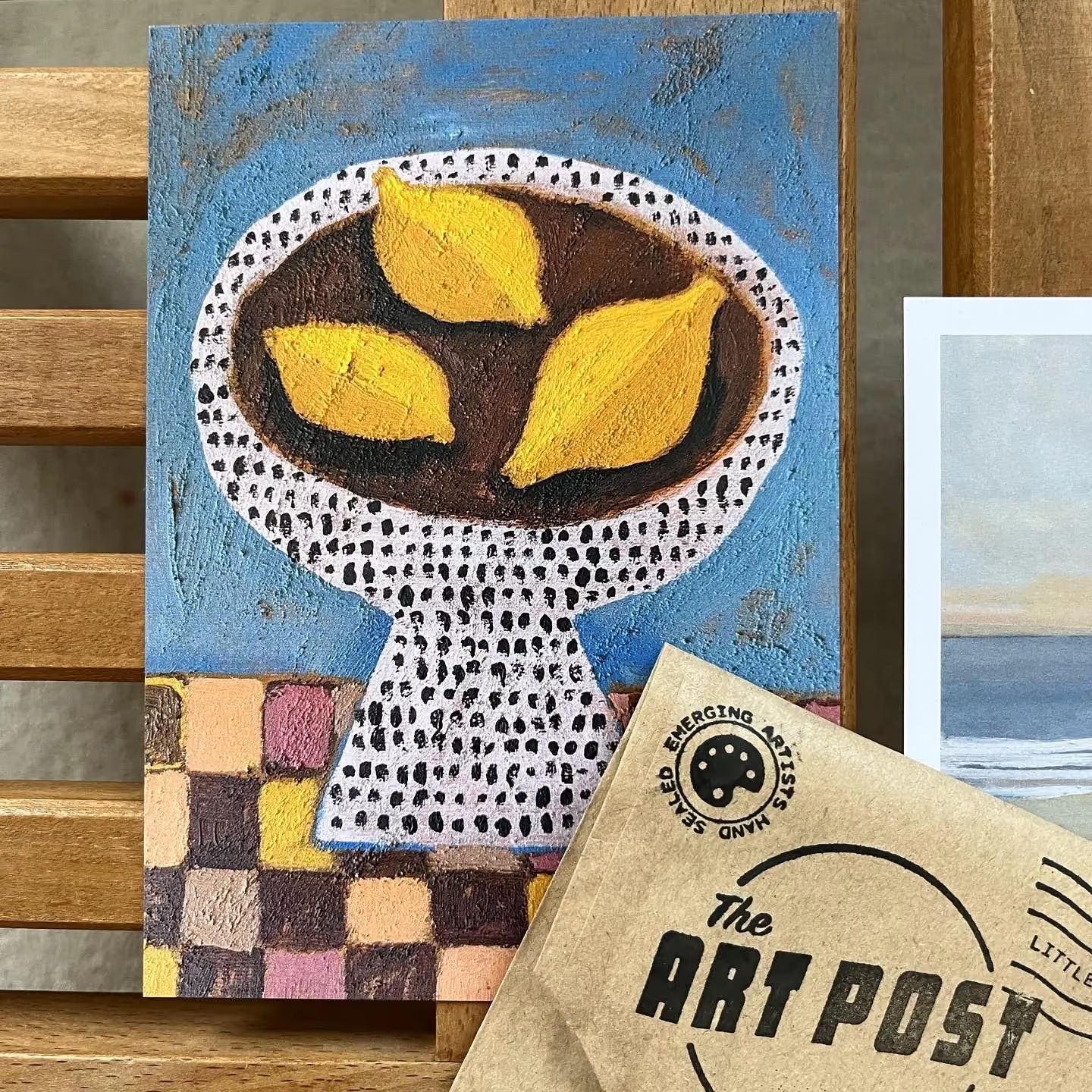
Check the print in daylight. Read the letter at its finished size. See whether the envelope protects its contents and whether the package arrives as you intended.
Photograph what members will actually receive: the contents together, a close-up and an image that makes the scale clear. Real photographs of your sample help people understand the offer.
5. Give your club a clear home
Your sign-up page should explain the offer before asking someone to subscribe. Include the contents, dimensions, materials, full price, payment frequency, delivery charges and delivery area.
Show the next joining deadline and expected dispatch date, alongside clear cancellation, returns and contact information. Keep the price and payment frequency close to a descriptive button such as “Join the postcard club”.
Then tell the story. Why this subject? Why through the post? What will members discover that they would not get from scrolling past a photograph of your work?
This is what Art Post Clubs is for: a ready-made club page with your photos, price and next dispatch date. Set up your club page
6. Set up subscriptions and a mailing routine
Before taking payments, test joining, confirmation, delivery-address updates and requests for help or cancellation.
Choose a system that identifies which paid members are due each edition. Keep addresses accurate and secure. Your joining deadline and billing arrangements must match your mailing process.
Allow time for ordering prints, checking quality, packing, recording dispatch and replacing missing or damaged mail. A subscription platform can support the administration; the artist still needs a workable production routine.
Art Post Clubs handles sign-ups, renewals, payments and your mailing list, so you can focus on making each edition. Start your club
7. Invite a manageable first group
Start with people who already respond to your work: past buyers, newsletter readers and followers who ask about particular pieces.
Show the sample and explain why you are making it. Let people see the artwork, the letter and the care involved in preparing the envelope.
If you cap the first intake, choose a number you can comfortably fulfil. Make the limit genuine and explain it plainly. The aim is to learn before promising more.
8. Learn from the first three editions
After each mailing, record what it cost, how long it took and what members said. Watch for recurring questions.
If people keep asking when their first envelope will arrive, improve the joining page and confirmation. If packing takes longer than expected, simplify the format or revisit the price.
Measure whether members stay as well as whether new people join. A sustainable club works for both the person receiving it and the artist making it.
What we’ve learned running The Art Post since 2020
Pick a frequency you can keep
Monthly and quarterly both work. Missing an edition doesn’t. We post quarterly, which gives us time to curate four artists properly for every edition.
Subscribers love surprises
Be clear about the format, size and quality, then keep the artwork itself a surprise until it lands on the doormat.
The story behind the work matters
Our Meet the Artists booklet is the part subscribers tell us they keep, long after the prints are on the wall.
The little things get noticed
A hand wax-seal, a quote on the back of a print, a note in your own handwriting. These are the details people mention when they tell us why they stay.
Say when the post will arrive
New members want to know when their first envelope comes, so we show the next dispatch date right beside the join button.